
Texas Disaster Damage Property Tax Exemption (Complete Guide for 2025)
By Harsha N Hegde
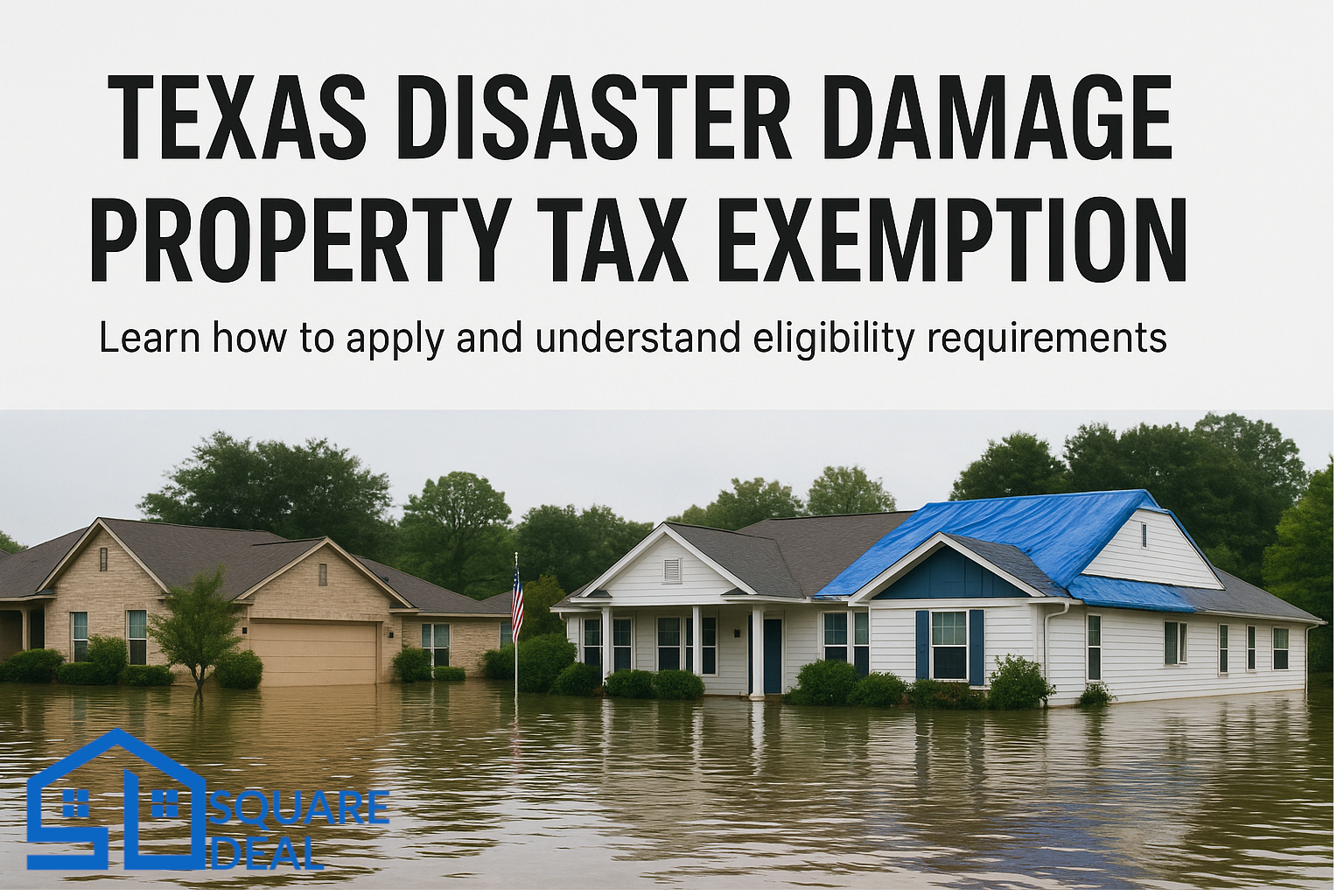
When a storm, flood, hurricane, tornado, hail event, wildfire or other disaster damages your property, Texas law allows you to apply for a temporary property tax exemption—but only if:
- The Governor has issued a disaster declaration, and
- Your property suffered at least 15% physical damage.
This exemption comes from Texas Property Tax Code Section 11.35 and can significantly reduce your taxes for that year. But it applies only for the remainder of the tax year after the disaster date—so deadlines matter.
What is the Texas Temporary Disaster Damage Exemption?
If your property suffers 15% or more physical damage in a Governor-declared disaster area, you can receive a partial temporary exemption on its appraised value for the current tax year.
This applies to:
- Residential homes
- Commercial buildings
- Manufactured homes
- Income-producing property
- Personal property used in a business
It does not apply to land by itself unless the improvements were damaged.
Which disasters qualify?
You qualify only if the Texas Governor issues an official disaster declaration covering your county.
Recent examples include:
- 2025 hail, flood or tornado events
- 2024 Texas storm and flooding events
- 2023 winter storms
To check if your county is included:
Texas Governor’s Disaster Proclamations:
https://gov.texas.gov/news/category/proclamation
If your county isn’t listed, you cannot claim this exemption.
How the damage rating levels work
The appraisal district assigns a damage assessment rating from Level I to Level IV.
| Level | Damage % | Description | Exemption % |
|---|---|---|---|
| Level I | 15% – 30% | Minor damage | 15% exemption |
| Level II | 30% – 60% | Moderate damage | 30% exemption |
| Level III | 60% – 100% | Major damage | 60% exemption |
| Level IV | 100% | Total loss | 100% exemption |
How the exemption is calculated
Texas prorates the exemption based on:
- Damage rating
- Appraised value
- Number of days remaining in the tax year after the disaster was declared
Formula:
Exemption = (Appraised Value × Damage % × (Days remaining in tax year / 365))Example:
- Appraised value: $400,000
- Damage: Level II (30%)
- Disaster date: October 1 (92 days remaining)
Exemption = $400,000 × 0.30 × (92/365)
≈ $30,240
Travis CAD has put up a disaster exemption calculator. Any homeowner in Texas can use this calculator to estimate their disaster exemption.
How to apply (Form 50-312)
Submit Form 50-312 to your appraisal district:
Download form:
https://comptroller.texas.gov/forms/50-312.pdf
Apply within 105 days from the Governor’s disaster declaration date.
Suggested documentation:
- Photos of damage
- Contractor estimates
- Insurance settlement statements
- FEMA assessments
- Structural inspection reports
How long the exemption lasts
The exemption ends on January 1 of the first year in which:
- The property is reappraised normally, or
- The property is fully repaired
Uninhabitable or Unstable Residence (Sec. 11.135)
Separate from the disaster exemption, Sec. 11.135 allows you to keep your homestead exemption while rebuilding if your home becomes uninhabitable.
Key rules:
- Applies only to your principal residence
- Homestead can continue for up to 2 years, or 5 years if in a Governor-declared disaster area
- Reconstruction must begin within 1 year
Common reasons for denial
- No Governor declaration for your county
- Damage assessed below 15%
- Insufficient proof of physical damage
- Missed the 105-day deadline
- Repairs completed before inspection
Frequently Asked Questions
What is the deadline to apply?
105 days from the Governor’s disaster declaration.
Can I apply if insurance is still pending?
Yes.
Does the exemption apply to land?
No. Only the structure/improvements.
What if my county was declared a disaster in 2024 or 2025?
You may apply for that tax year if your property was damaged.
Where do I check declared counties?
https://gov.texas.gov/news/category/proclamation
Do renters qualify?
No.
Will I get a refund if I already paid my taxes?
Yes. The tax office will issue a refund.
About the Author
Harsha N Hegde is the founder of https://squaredeal.tax, a DIY platform that helps Texas homeowners protest unfair property tax assessments. He has helped thousands of Texas homeowners save money using comps-based evidence and practical guidance.
Related Posts
Have questions? Use the comments section below to ask. We respond to all questions!